Skip to content
← Back to News
news Feature story

AI Agent Integration Patterns: Connecting to APIs, Databases, and Enterprise Systems

15 10 月 2026 smaugbrain 8 min read WordPress post

AI Agent Integration Patterns: Connecting to APIs, Databases, and Enterprise Systems

Introduction

Building an AI agent is only the first step. The real challenge begins when you need to connect it to the systems your business actually runs on — internal APIs, databases, legacy enterprise tools, and third-party services. Without proper integration patterns, even the most sophisticated agent remains isolated, unable to act on real data or trigger meaningful workflows.

This guide covers production-ready integration patterns for AI agents, from simple REST API calls to complex enterprise service bus connections. We’ll explore how to structure these integrations for reliability, security, and observability — the three pillars that separate proof-of-concept agents from production systems.

The Integration Problem

Most AI agents start as isolated conversational assistants. They can answer questions, generate text, and even reason through problems. But they can’t:

  • Query your customer database to personalize responses
  • Create tickets in your helpdesk system
  • Update inventory in your e-commerce platform
  • Trigger deployment pipelines in your CI/CD system
  • Read from your internal knowledge base
  • Write to your analytics database
  • Without integration, agents remain curiosities rather than productivity tools. The gap between “talking to an agent” and “agent completing real work” is entirely defined by integration quality.

    Core Integration Patterns
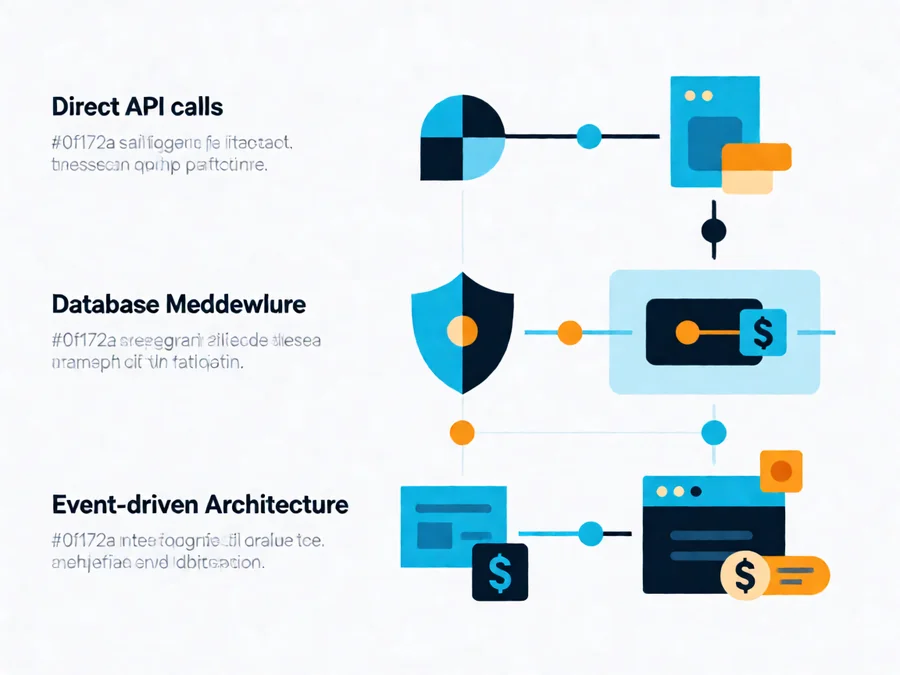
    Three core AI agent integration patterns: direct API calls, database middleware, and event-driven architecture

    Pattern 1: Direct API Calls

    The simplest pattern involves the agent calling external APIs directly. This works well for public APIs with straightforward authentication.

    **Implementation approach:**

  • Agent identifies when an API call is needed based on user intent
  • Agent constructs the appropriate request with parameters extracted from conversation
  • API response is parsed and incorporated into the agent’s context
  • Results are presented to the user in natural language
  • **When to use this pattern:**

  • Public APIs with open authentication (API keys, OAuth)
  • Simple request/response flows
  • Low-latency requirements where the agent can wait for the response
  • Limited sensitive data exposure
  • **Example use case:** A customer support agent that looks up order status by calling your e-commerce API. The agent receives the order ID from the customer, queries the API, and returns the current shipping status.

    **Reliability considerations:**

  • Implement retry logic with exponential backoff for transient failures
  • Set appropriate timeouts (typically 5-15 seconds for API calls)
  • Cache frequently accessed data to reduce API load
  • Handle rate limiting gracefully with queuing or deferral
  • Pattern 2: Database Access via Middleware

    Direct database access from agents is generally discouraged due to security and performance concerns. Instead, use middleware services that expose controlled database operations.

    **Implementation approach:**

  • Build a middleware layer (REST API or GraphQL) that exposes specific database operations
  • The middleware handles authentication, authorization, and query validation
  • Agent calls the middleware instead of connecting directly to the database
  • Middleware enforces business rules and data access policies
  • **When to use this pattern:**

  • Sensitive data that requires strict access controls
  • Complex queries that need business logic validation
  • High-volume databases where direct agent connections would impact performance
  • Multi-tenant environments requiring data isolation
  • **Security best practices:**

  • Never expose raw database credentials to agents
  • Use parameterized queries to prevent injection attacks
  • Implement row-level security for multi-tenant applications
  • Log all database access for audit purposes
  • Limit query complexity and result set sizes
  • Pattern 3: Event-Driven Integration

    For asynchronous operations or long-running workflows, event-driven patterns allow agents to participate in distributed systems without blocking.

    **Implementation approach:**

  • Agent publishes events to a message queue or event bus when actions complete
  • Other systems subscribe to these events and respond accordingly
  • Agent can also listen for events from other systems to trigger responses
  • Events carry structured data about the action taken
  • **When to use this pattern:**

  • Operations that take longer than typical API timeouts
  • Systems that need decoupling for independent scaling
  • Complex workflows spanning multiple services
  • Real-time notifications and updates
  • **Event design considerations:**

  • Use schema validation (JSON Schema, Avro) for event payloads
  • Include correlation IDs to track requests across systems
  • Implement idempotency keys to handle duplicate events
  • Design for event ordering when it matters
  • Set appropriate TTL for event retention
  • Pattern 4: Enterprise Service Bus (ESB) Integration

    For legacy enterprise systems, ESB or integration platform patterns provide standardized connectivity.

    **Implementation approach:**

  • Agent communicates with the ESB using standard protocols (REST, SOAP, JMS)
  • ESB handles protocol translation, message routing, and transformation
  • Legacy systems remain unchanged while gaining API-like access
  • Agent interacts with a modern interface while the ESB manages complexity
  • **When to use this pattern:**

  • Connecting to legacy systems (mainframes, ERP, CRM)
  • Multi-protocol environments requiring translation
  • Organizations with existing integration infrastructure
  • Regulatory environments requiring audit trails
  • **Common ESB patterns:**

  • Request-response for synchronous operations
  • Publish-subscribe for event distribution
  • Routing and filtering for message distribution
  • Transformation for data format conversion
  • Aggregation for combining multiple responses
  • Pattern 5: GraphQL Federation

    For applications requiring flexible data querying across multiple sources, GraphQL federation allows agents to request exactly the data they need.

    **Implementation approach:**

  • Expose a unified GraphQL schema that combines data from multiple sources
  • Agent constructs precise queries based on user requirements
  • GraphQL gateway resolves each field from the appropriate backend service
  • Schema can evolve independently per service
  • **When to use this pattern:**

  • Applications with diverse data sources
  • Need for flexible querying without API versioning
  • Mobile or web clients with varying data requirements
  • Microservices architectures requiring data composition
  • Authentication and Security

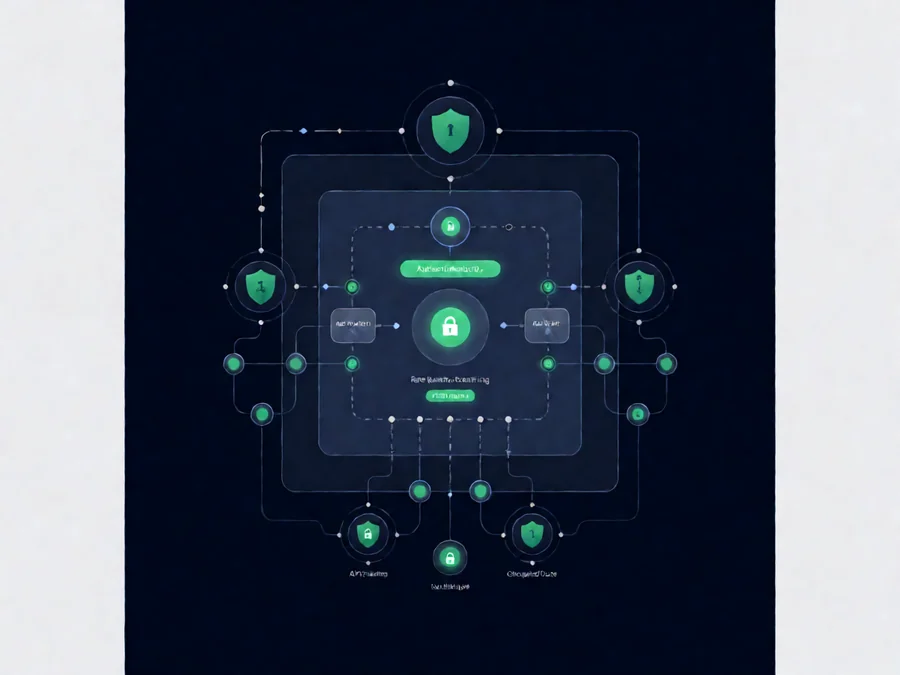
    AI agent security and authentication protection layers for system integrations

    Integration introduces security complexity. Agents accessing external systems must handle authentication properly.

    API Key Management

    Store API keys securely using environment variables or secrets management. Never hardcode credentials in agent prompts or configuration files. Rotate keys regularly and implement key scoping to limit damage from leaks.

    OAuth and Token Exchange

    For systems requiring OAuth, implement token refresh flows and handle token expiration gracefully. Use short-lived access tokens with refresh token rotation when possible.

    Rate Limiting and Quotas

    Respect API rate limits by implementing:

  • Request queuing with priority handling
  • Backoff strategies for throttling responses
  • Caching to reduce redundant calls
  • Usage monitoring and alerting
  • Data Privacy

    Ensure agents don’t expose sensitive data in logs or responses. Implement data masking for PII and compliance fields. Validate all inputs from agents before passing to external systems.

    Error Handling and Resilience

    Integration failures are inevitable. Build resilience into every connection point.

    Retry Strategies

    Implement tiered retry logic:

  • **Transient errors** (5xx, timeouts): Retry with exponential backoff, max 3 attempts
  • **Rate limiting** (429): Wait and retry, respecting Retry-After headers
  • **Authentication failures**: Fail fast, alert admin, do not retry automatically
  • **Data validation errors**: Return clear error to user, do not retry
  • Circuit Breaker Pattern

    Prevent cascading failures by implementing circuit breakers:

  • **Closed**: Normal operation, requests flow through
  • **Open**: Failures detected, requests fail immediately
  • **Half-open**: Test with limited requests to check recovery
  • Configure thresholds based on your error tolerance and business impact.

    Timeout Configuration

    Set appropriate timeouts:

  • **Connect timeout**: 2-5 seconds
  • **Read timeout**: 10-30 seconds for API calls
  • **Long operations**: 60+ seconds with progress tracking
  • Use different timeouts for different integration types
  • Fallback Responses

    When integrations fail, provide useful fallbacks:

  • Cached data with staleness indication
  • Graceful degradation (partial results)
  • Clear error messages to users
  • Async processing for non-critical operations
  • Observability and Monitoring

    Integration health directly impacts agent reliability. Monitor every connection.

    Key Metrics

    Track these metrics for each integration:

  • **Success rate**: Percentage of successful calls
  • **Latency**: P50, P95, P99 response times
  • **Error breakdown**: By type (timeout, auth, validation, etc.)
  • **Throughput**: Requests per second
  • **Circuit breaker state**: Closed, open, or half-open
  • **Cache hit rate**: For cached integration responses
  • Logging Strategy

    Implement structured logging with:

  • Correlation IDs for request tracing
  • Request/response payloads (sanitized)
  • Timing information
  • Error details with stack traces
  • Integration source identification
  • Alerting

    Set up alerts for:

  • Success rate dropping below threshold (typically 99.9%)
  • Latency exceeding SLA targets
  • Circuit breaker opening
  • Auth failures
  • Rate limit hits exceeding normal patterns
  • Implementation Checklist

    Before deploying integration-capable agents, verify:

  • [ ] All external credentials stored securely (env vars, secrets manager)
  • [ ] API keys rotated and scoped to minimum required permissions
  • [ ] Rate limits documented and implemented in agent logic
  • [ ] Timeouts configured appropriately for each integration type
  • [ ] Retry logic implemented with exponential backoff
  • [ ] Circuit breakers in place for critical dependencies
  • [ ] Error responses are user-friendly and actionable
  • [ ] Logging captures sufficient detail for debugging
  • [ ] Monitoring dashboards cover all integration points
  • [ ] Alerting configured for failure conditions
  • [ ] Fallback behaviors tested and documented
  • [ ] Security review completed for all data flows
  • [ ] Compliance requirements addressed (PII, audit trails)
  • [ ] Load testing performed for expected traffic volumes
  • Common Pitfalls

    Over-Integrating Early

    Don’t integrate every possible system from day one. Start with the highest-value integrations and expand based on usage patterns. Each integration adds complexity and failure surface.

    Ignoring Network Partitions

    Assume network failures will occur. Design for partial availability where the agent can still function with reduced capabilities rather than complete failure.

    Not Handling Schema Changes

    External APIs change. Implement schema validation and version detection to handle breaking changes gracefully rather than silent failures.

    Coupling Agent Logic to Integration Details

    Keep integration code separate from agent reasoning. Use adapters and abstractions so you can swap integration implementations without modifying agent behavior.

    Forgetting to Test with Real Data

    Mock data hides real integration issues. Test with production-like data volumes and edge cases to uncover performance and correctness problems early.

    Conclusion

    Integration patterns transform AI agents from isolated conversational tools into powerful productivity systems. By choosing the right pattern for each integration scenario, implementing proper security and error handling, and building comprehensive observability, you can create agents that reliably interact with your entire technology stack.

    The key is starting simple, monitoring closely, and iterating based on real usage patterns. Each successful integration expands what your agents can accomplish, making them increasingly valuable to your organization.

    For implementation guidance on building production-ready agents with robust integration capabilities, visit [SmaugBrain](https://www.smaugbrain.com/) to explore our agent development platform and documentation.