
AI Agent Integration Patterns: Connecting to APIs, Databases, and Enterprise Systems
Introduction
Building an AI agent is only the first step. The real challenge begins when you need to connect it to the systems your business actually runs on — internal APIs, databases, legacy enterprise tools, and third-party services. Without proper integration patterns, even the most sophisticated agent remains isolated, unable to act on real data or trigger meaningful workflows.
This guide covers production-ready integration patterns for AI agents, from simple REST API calls to complex enterprise service bus connections. We’ll explore how to structure these integrations for reliability, security, and observability — the three pillars that separate proof-of-concept agents from production systems.
The Integration Problem
Most AI agents start as isolated conversational assistants. They can answer questions, generate text, and even reason through problems. But they can’t:
Without integration, agents remain curiosities rather than productivity tools. The gap between “talking to an agent” and “agent completing real work” is entirely defined by integration quality.
Core Integration Patterns
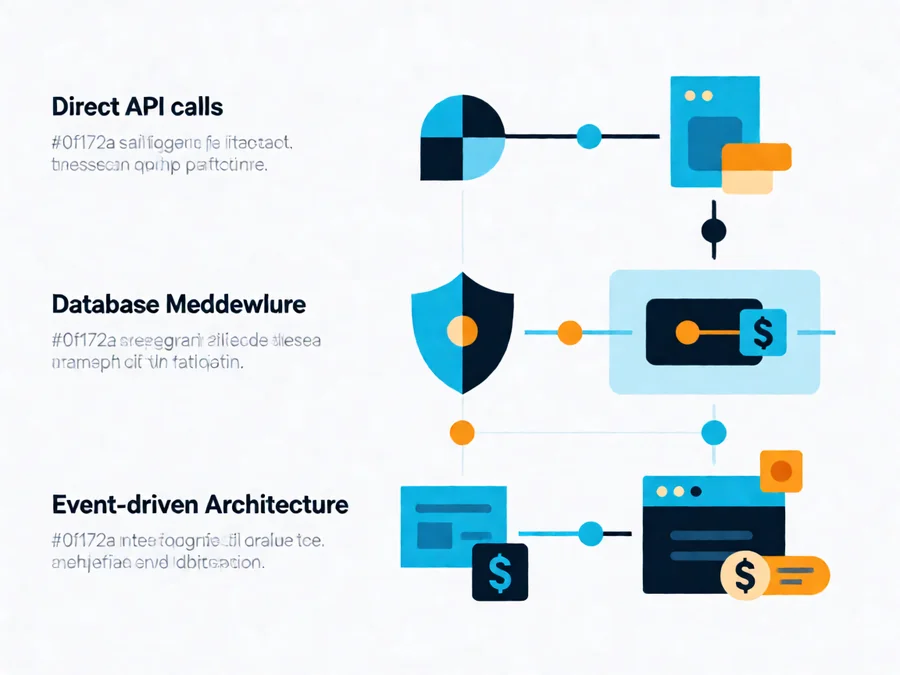
Pattern 1: Direct API Calls
The simplest pattern involves the agent calling external APIs directly. This works well for public APIs with straightforward authentication.
**Implementation approach:**
**When to use this pattern:**
**Example use case:** A customer support agent that looks up order status by calling your e-commerce API. The agent receives the order ID from the customer, queries the API, and returns the current shipping status.
**Reliability considerations:**
Pattern 2: Database Access via Middleware
Direct database access from agents is generally discouraged due to security and performance concerns. Instead, use middleware services that expose controlled database operations.
**Implementation approach:**
**When to use this pattern:**
**Security best practices:**
Pattern 3: Event-Driven Integration
For asynchronous operations or long-running workflows, event-driven patterns allow agents to participate in distributed systems without blocking.
**Implementation approach:**
**When to use this pattern:**
**Event design considerations:**
Pattern 4: Enterprise Service Bus (ESB) Integration
For legacy enterprise systems, ESB or integration platform patterns provide standardized connectivity.
**Implementation approach:**
**When to use this pattern:**
**Common ESB patterns:**
Pattern 5: GraphQL Federation
For applications requiring flexible data querying across multiple sources, GraphQL federation allows agents to request exactly the data they need.
**Implementation approach:**
**When to use this pattern:**
Authentication and Security
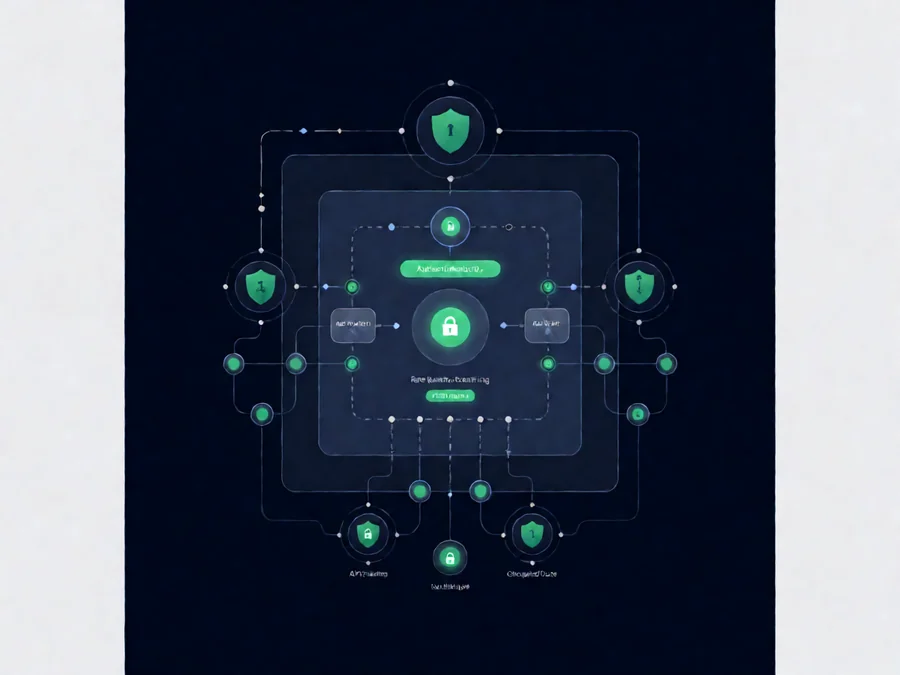
Integration introduces security complexity. Agents accessing external systems must handle authentication properly.
API Key Management
Store API keys securely using environment variables or secrets management. Never hardcode credentials in agent prompts or configuration files. Rotate keys regularly and implement key scoping to limit damage from leaks.
OAuth and Token Exchange
For systems requiring OAuth, implement token refresh flows and handle token expiration gracefully. Use short-lived access tokens with refresh token rotation when possible.
Rate Limiting and Quotas
Respect API rate limits by implementing:
Data Privacy
Ensure agents don’t expose sensitive data in logs or responses. Implement data masking for PII and compliance fields. Validate all inputs from agents before passing to external systems.
Error Handling and Resilience
Integration failures are inevitable. Build resilience into every connection point.
Retry Strategies
Implement tiered retry logic:
Circuit Breaker Pattern
Prevent cascading failures by implementing circuit breakers:
Configure thresholds based on your error tolerance and business impact.
Timeout Configuration
Set appropriate timeouts:
Fallback Responses
When integrations fail, provide useful fallbacks:
Observability and Monitoring
Integration health directly impacts agent reliability. Monitor every connection.
Key Metrics
Track these metrics for each integration:
Logging Strategy
Implement structured logging with:
Alerting
Set up alerts for:
Implementation Checklist
Before deploying integration-capable agents, verify:
Common Pitfalls
Over-Integrating Early
Don’t integrate every possible system from day one. Start with the highest-value integrations and expand based on usage patterns. Each integration adds complexity and failure surface.
Ignoring Network Partitions
Assume network failures will occur. Design for partial availability where the agent can still function with reduced capabilities rather than complete failure.
Not Handling Schema Changes
External APIs change. Implement schema validation and version detection to handle breaking changes gracefully rather than silent failures.
Coupling Agent Logic to Integration Details
Keep integration code separate from agent reasoning. Use adapters and abstractions so you can swap integration implementations without modifying agent behavior.
Forgetting to Test with Real Data
Mock data hides real integration issues. Test with production-like data volumes and edge cases to uncover performance and correctness problems early.
Conclusion
Integration patterns transform AI agents from isolated conversational tools into powerful productivity systems. By choosing the right pattern for each integration scenario, implementing proper security and error handling, and building comprehensive observability, you can create agents that reliably interact with your entire technology stack.
The key is starting simple, monitoring closely, and iterating based on real usage patterns. Each successful integration expands what your agents can accomplish, making them increasingly valuable to your organization.
For implementation guidance on building production-ready agents with robust integration capabilities, visit [SmaugBrain](https://www.smaugbrain.com/) to explore our agent development platform and documentation.