
AI Agent Semantic Search and RAG Optimization: Vector Databases, Embedding Models, and Retrieval Strategies
Semantic search is the backbone of effective Retrieval-Augmented Generation (RAG) systems. For AI agents that need to access and reason over large knowledge bases, getting retrieval right can mean the difference between accurate, contextual responses and frustrating hallucinations. This guide covers the practical decisions you’ll face when building production RAG systems: choosing vector databases, selecting embedding models, implementing hybrid retrieval, and tuning for performance.
Whether you’re starting a new agent project or optimizing an existing RAG pipeline, this guide provides actionable frameworks for making the right technical choices at each layer of your retrieval stack.
What Makes Semantic Search Different in AI Agents?
Traditional keyword search matches terms exactly. Semantic search understands meaning, returning results based on conceptual similarity even when the exact words differ. For AI agents, this distinction is critical because:
- Context windows are limited. Modern LLMs handle 128K-1M tokens, but your agent’s knowledge base might contain millions of documents. RAG retrieves only the most relevant passages, keeping context manageable.
- Queries are often ambiguous. Users don’t always know what they’re looking for. Semantic search handles vague or indirect queries better than keyword matching.
- Agents need factual grounding. Hallucinations erode trust. Quality retrieval ensures agents cite actual source material rather than generating plausible-sounding but incorrect information.
Effective semantic search rests on three pillars: embedding quality (how well vectors capture meaning), vector database performance (speed and scale of retrieval), and retrieval strategy (how queries are transformed and results ranked).
Choosing the Right Vector Database for Production
Vector databases store and index high-dimensional embeddings for fast similarity search. The right choice depends on your scale, latency requirements, and operational preferences.
Leading Options Compared
| Database | Type | Scale | Latency | Cost | Best For |
|---|---|---|---|---|---|
| Pinecone | Managed | 100M+ vectors | <100ms | Usage-based | Production workloads, minimal ops |
| Weaviate | Self-hosted/Cloud | 10B+ vectors | <50ms | Free (self-hosted) | Complex queries, graph integration |
| Milvus | Self-hosted/Cloud | 10B+ vectors | <100ms | Free (self-hosted) | Large-scale, multi-region deployments |
| Qdrant | Self-hosted/Cloud | 1B+ vectors | <50ms | Free (self-hosted) | Rust performance, filtering efficiency |
| pgvector | Extension (PostgreSQL) | 100M+ vectors | PostgreSQL cost | Teams already using PostgreSQL |
Decision Framework
Choose Pinecone when you need zero operational overhead and can absorb usage costs. It excels at simplicity but offers less control over infrastructure.
Choose Weaviate or Qdrant when you need advanced filtering, graph relationships, or tight integration with your existing data stack. Both offer strong query languages and rich metadata support.
Choose Milvus for massive scale (billions of vectors) or multi-region deployments requiring geographic data distribution.
Choose pgvector if your team already manages PostgreSQL and you want to avoid adding another service to your stack. Expect higher latency than dedicated vector databases but simpler operations.
Embedding Model Selection: Balancing Quality and Cost
Embedding models convert text into high-dimensional vectors. Model choice directly impacts retrieval quality and ongoing costs.
Model Comparison
| Model | Dimensions | Average Length | Cost (per 1K) | Quality Tier |
|---|---|---|---|---|
| text-embedding-3-small | 1536 (variable) | 8192 tokens | $0.02 | Good |
| text-embedding-3-large | 3072 (variable) | 8192 tokens | $0.13 | Excellent |
| bge-large-en-v1.5 | 1024 | 512 tokens | Free (self-hosted) | Very Good |
| gte-large | 1024 | 8192 tokens | Free (self-hosted) | Very Good |
| nomic-embed-text-v1.5 | 768 | 8192 tokens | Free (self-hosted) | Good |
Dimensionality Trade-offs
Higher dimensions generally mean better quality but higher storage and compute costs. A practical approach:
- 384-512 dimensions: Budget-conscious projects, high-volume embeddings. Quality is good but not optimal.
- 768-1024 dimensions: Sweet spot for most applications. Good quality with reasonable costs.
- 1536-3072 dimensions: Maximum quality for critical applications where retrieval accuracy matters most.
Batch Embedding Strategies
Embedding costs scale with volume. Optimize with these techniques:
- Batch requests: Group multiple texts into single API calls when possible.
- Caching: Store embeddings for identical text to avoid recomputation.
- Selective embedding: Only embed high-value content; use keyword search for ephemeral or low-priority data.
- Periodic refresh: Re-embed content that changes frequently; leave static content cached.
Hybrid Retrieval Strategies That Actually Work
Dense retrieval (vector similarity) alone often misses nuance. Hybrid approaches combine multiple signals for better results.
Dense + Sparse Fusion
Combine vector similarity (dense) with term matching (sparse/keyword). This captures both semantic meaning and exact keyword matches:
- RRF (Reciprocal Rank Fusion): Rank results from both methods, combine rankings using reciprocal rank formula. Simple, effective, widely used.
- Weighted fusion: Assign weights to dense and sparse scores, normalize, and combine.
Reranking Pipelines
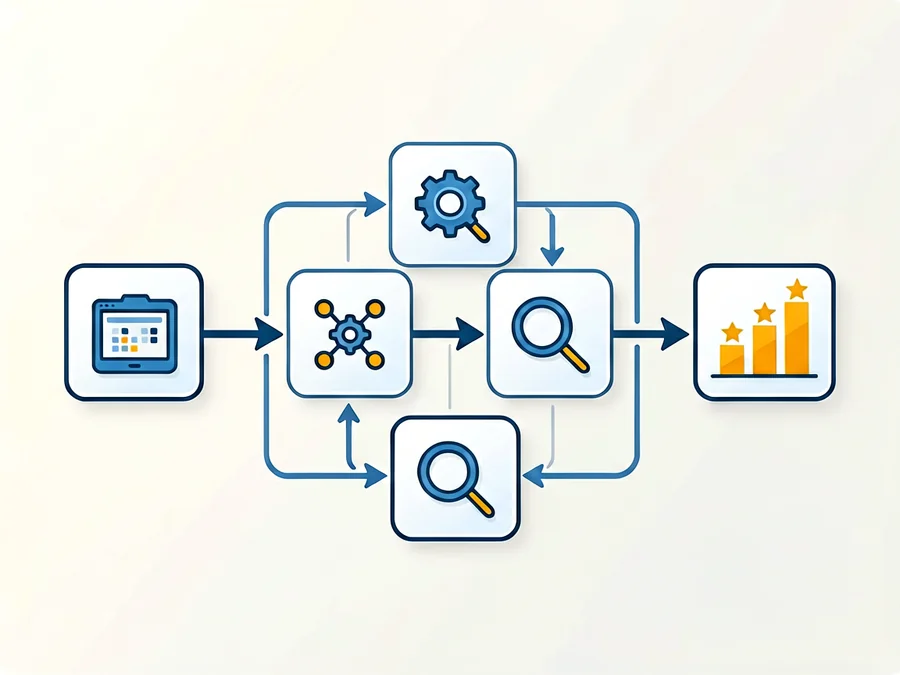
After initial retrieval, use a cross-encoder to rerank results. Cross-encoders evaluate query-document pairs directly, providing more accurate relevance scores than bi-encoders (which encode query and document independently).
Production pattern:
- Retrieve top-50 candidates using fast dense + sparse search
- Rerank top-50 using a cross-encoder model
- Return top-5 to the LLM
This two-stage approach balances speed and accuracy: fast retrieval finds candidates, reranking ensures quality.
Query Transformation
Transform user queries before retrieval to improve matching:
- Query expansion: Add related terms or synonyms
- Query rewriting: Rephrase for better semantic match
- Multi-query retrieval: Generate multiple query variants and retrieve from each
Production Performance Tuning
Caching Strategies
Cache embeddings and query results to reduce latency and costs:
- Embedding cache: Store embeddings for repeated texts with hash-based lookup
- Query result cache: Cache retrieval results for identical or near-identical queries
- TTL-based invalidation: Expire caches when source data changes
Chunking Optimization
How you split documents affects retrieval quality:
- Fixed-size chunks: Simple but may split logical units
- Semantic chunking: Split at natural boundaries (paragraphs, sections)
- Overlapping chunks: Add overlap (10-20%) to preserve context across boundaries
Rule of thumb: chunk size should match typical query context needs. For technical documentation, 500-800 tokens per chunk often works well.
Latency Optimization
- Parallel retrieval: Query multiple indexes or strategies concurrently
- Approximate nearest neighbor (ANN): Use approximate methods for faster search at slight quality cost
- Pre-filtering: Apply metadata filters before vector search to reduce search space
Common Pitfalls in RAG Implementation
Over-chunking vs. Under-chunking
Chunks that are too small lose context; chunks that are too large introduce noise. Start with 500-1000 token chunks and iterate based on retrieval quality.
Ignoring Metadata Filtering
Semantic search alone isn’t enough. Combine with metadata filters (date, author, document type) to constrain retrieval to relevant subsets.
Not Evaluating Retrieval Quality
Measure retrieval precision and recall on sample queries. Track whether returned documents actually answer the query. Without evaluation, you’re optimizing blindly.
Embedding Drift
As your knowledge base grows, retrieval quality may degrade. Schedule periodic re-embedding or incremental updates to maintain quality.
FAQ: Semantic Search for AI Agents
How do I choose between Pinecone, Weaviate, and Milvus?
Choose Pinecone for managed simplicity and predictable scaling. Choose Weaviate for advanced filtering and graph capabilities. Choose Milvus for massive scale (billions of vectors) or multi-region deployments. All three support the same core operations; differences lie in operational model and advanced features.
What embedding dimension should I use for cost optimization?
Start with 768-1024 dimensions for the best quality-cost balance. Use 384 dimensions only if storage or latency is critical. Reserve 1536+ dimensions for maximum accuracy requirements where cost is secondary.
Is hybrid search worth the added complexity?
For production systems handling diverse queries, yes. Hybrid search consistently outperforms pure dense retrieval, especially for exact match requirements or domain-specific terminology. The complexity is manageable with modern libraries.
How often should I re-embed my knowledge base?
Re-embed when you change embedding models, add significant new content, or notice retrieval quality degradation. For static knowledge bases, annual re-embedding is often sufficient. For dynamic content, consider incremental updates.
What’s the difference between dense and sparse retrieval?
Dense retrieval uses vector similarity to find semantically related content. Sparse retrieval (BM25/keyword) finds exact term matches. Dense captures meaning; sparse captures precision. Together, they cover both semantic and literal matching.
How do I measure RAG retrieval quality?
Use metrics like Hit Rate (relevant document in top-K results), MRR (Mean Reciprocal Rank), and NDCG (Normalized Discounted Cumulative Gain). Create a labeled dataset of queries with expected relevant documents and track these metrics over time.
Real-World Implementation Examples
Understanding the theory is one thing; seeing how these patterns work in practice is another. Here are concrete examples from production AI agent deployments.
Example 1: Customer Support Agent
A SaaS company built a customer support agent using semantic search over their knowledge base. The implementation:
- Vector database: Pinecone with 500K product documentation vectors
- Embedding model: text-embedding-3-small (1536 dimensions)
- Chunking strategy: 600-token chunks with 100-token overlap
- Retrieval: Hybrid search combining dense retrieval (top-20) with BM25 (top-10), reranked by a cross-encoder
- Result: 85% first-contact resolution rate, down from 62% with keyword search alone
Example 2: Code Documentation Assistant
An engineering team created an internal tool that helps developers find relevant code patterns and documentation. Key decisions:
- Vector database: Milvus self-hosted on Kubernetes (10M+ code snippets)
- Embedding model: Custom fine-tuned model on internal code corpus
- Metadata filtering: Filter by language, project, and file type before semantic search
- Caching: Redis cache for common queries, reducing embedding costs by 40%
- Result: Average response time under 200ms, developer satisfaction increased 3x
The Evaluation Framework
Before deploying any RAG system, establish an evaluation framework. Without measurement, optimization is guesswork.
Offline Evaluation
Create a held-out test set of query-document pairs. For each query, mark which documents should be retrieved. Then measure:
- Recall@K: What percentage of relevant documents appear in top-K results?
- Precision@K: What percentage of retrieved documents are relevant?
- Mean Reciprocal Rank (MRR): Average of reciprocal ranks of first relevant document
- NDCG: Normalized Discounted Cumulative Gain accounts for ranking position
Online Evaluation
After deployment, track user-facing metrics:
- Response quality ratings: Allow users to rate agent responses
- Citation accuracy: Check if cited sources actually support claims
- Relevant query rate: How often do users refine their queries?
- Time-to-answer: Total latency including retrieval and generation
Advanced Techniques for Production Systems
Metadata-Aware Retrieval
Pure semantic search misses important context. Combine vector similarity with structured metadata filters:
- Temporal filtering: Prioritize recent documents for time-sensitive queries
- Author/source filtering: Weight authoritative sources higher
- Category routing: Route queries to specialized indexes based on topic
Freshness and Drift Management
Knowledge bases change over time. Implement these strategies:
- Incremental updates: Re-embed only changed documents
- Freshness signals: Down-weight stale content in ranking
- Version tracking: Maintain multiple versions for historical queries
Multi-Modal Search
For agents that process both text and images, consider multi-modal embeddings:
- CLIP models: Unified embeddings for text and images
- Cross-modal retrieval: Search images with text queries and vice versa
- Fusion strategies: Combine modalities at retrieval or ranking stage
Cost Optimization Strategies
Production RAG systems can incur significant ongoing costs. Here’s how to optimize:
| Cost Area | Optimization Strategy | Potential Savings |
|---|---|---|
| Embedding API calls | Cache embeddings, batch requests | 60-80% |
| Vector database queries | Approximate search, dimensionality reduction | 40-60% |
| Cross-encoder reranking | Use on top-50 only, not top-1000 | 50-70% |
| Storage costs | Dimensionality reduction, compression | 30-50% |
Remember: optimization should never come at the cost of retrieval quality. Test each change against your evaluation metrics before deploying.
Get Started with Semantic Search in Your AI Agent
Building effective semantic search requires iterating across embedding models, retrieval strategies, and evaluation metrics. Start simple with a managed vector database and standard embeddings, then optimize based on your specific query patterns and quality requirements.
For AI agents that need reliable, production-grade semantic search, consider platforms like SmaugBrain that handle infrastructure complexity so you can focus on building intelligent workflows.
Related: AI Agent RAG Implementation Guide | AI Agent Memory Architecture