
AI Agent Knowledge Retrieval: Implementing RAG for Production Systems
Retrieval-Augmented Generation (RAG) has become the standard approach for giving AI agents access to domain knowledge without retraining. Instead of relying solely on a model’s static training data, RAG systems retrieve relevant information at inference time and inject it into the prompt. For production AI agents, this means accurate, up-to-date, and verifiable responses grounded in your own data.
This guide covers the practical aspects of building RAG-powered AI agents: architecture patterns, embedding strategies, retrieval pipelines, and production considerations. Whether you’re integrating a vector database or building a custom retrieval system, these patterns will help you ship reliable knowledge retrieval.
What Is RAG in AI Agents?
RAG combines retrieval and generation into a single workflow. When an AI agent receives a query, it first retrieves relevant documents or passages from a knowledge base, then uses those retrieved materials to generate a response. The retrieved context acts as a temporary knowledge injection, supplementing the model’s built-in training.
The core benefit is factual grounding. A model without retrieval can hallucinate details when discussing proprietary systems, recent events, or niche technical topics. With RAG, the agent answers from your actual documents, reducing hallucination risk and improving answer relevance.
RAG vs. Fine-Tuning
| Aspect | RAG | Fine-Tuning |
|---|---|---|
| Knowledge freshness | Real-time updates | Requires retraining |
| Cost | Lower inference cost | Higher training cost |
| Hallucination risk | Reduced with retrieval | May persist |
| Domain specificity | Flexible, document-based | Fixed after training |
| Interpretability | Source citations possible | Black box outputs |
For most production AI agent applications, RAG is the preferred approach. Fine-tuning remains useful for style adaptation or specialized task behavior, but knowledge retrieval through RAG handles the bulk of factual grounding needs.
RAG Architecture Patterns
Production RAG systems typically follow one of three architectural patterns. Each pattern balances latency, accuracy, and implementation complexity differently.
Single-Turn Retrieval
The simplest pattern retrieves once per query. The agent sends the user question to a retriever, receives top-k documents, and passes them to the LLM for generation. This approach works well for straightforward Q&A tasks where the question has a clear answer in the knowledge base.
Single-turn retrieval is fast and predictable. However, it struggles with complex queries that require multiple retrieval steps or iterative refinement. If the initial retrieval misses relevant documents, the model generates from incomplete context.
Multi-Turn Retrieval Chains
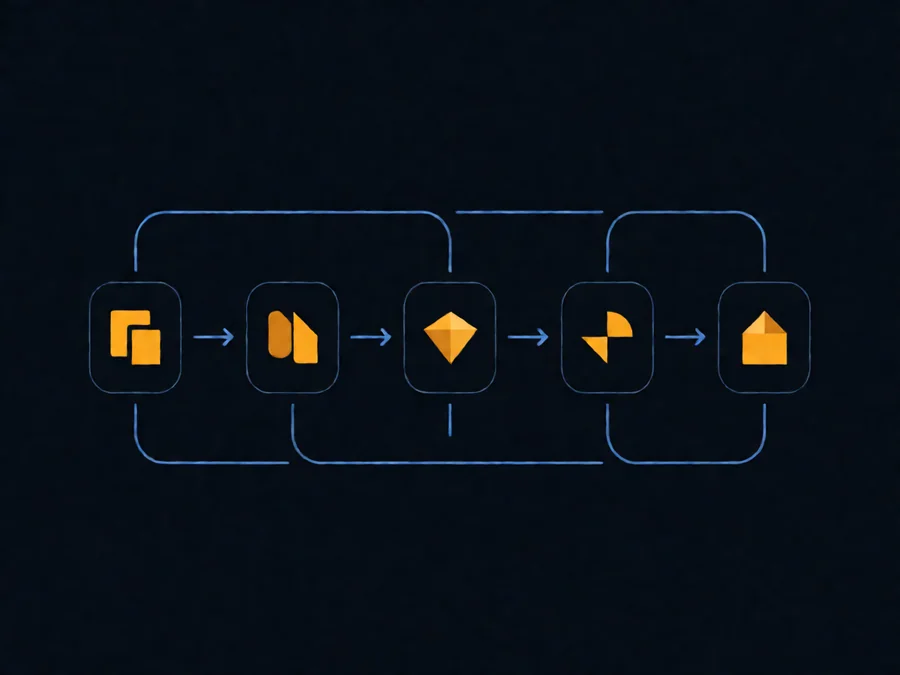
Multi-turn patterns chain multiple retrieval and generation steps. The agent retrieves documents, generates an intermediate response or clarification, then retrieves additional context based on that response. This mimics how a human researcher would iteratively explore a topic.
Multi-turn chains improve accuracy for complex queries but increase latency and token costs. Each additional retrieval and generation step adds processing time. For real-time agent applications, limit chain depth to two or three iterations.
Hybrid Retrieval with Query Rewriting
Hybrid systems combine dense vector retrieval with sparse keyword search and query rewriting. The original user query gets rewritten or expanded before retrieval, improving recall. Dense embeddings capture semantic similarity, while keyword search catches exact term matches.
This pattern delivers the best retrieval quality for production systems. The query rewriting step is critical — a well-rewritten query can dramatically improve retrieval accuracy compared to the raw user input.
Embedding Models and Vector Databases
Embedding models convert text into high-dimensional vectors that capture semantic meaning. These vectors enable similarity search: documents with similar meanings have similar vector representations.
Embedding Model Selection
Choose embedding models based on your accuracy requirements and cost constraints. OpenAI’s text-embedding-3-large offers strong performance for general purposes. For cost-sensitive applications, consider open-source models like BGE-M3 or E5-Large, which run locally and eliminate API costs.
Embedding dimensionality affects storage and search performance. Larger dimensions (1024+) generally provide better retrieval quality but require more storage and slower nearest-neighbor searches. Most production systems use 768 or 1024-dimensional embeddings as a balance.
Vector Database Options
Vector databases store embeddings and enable efficient similarity search. Popular options include:
- Pinecone: Managed service with strong scalability and simple API
- Weaviate: Open-source with hybrid search and built-in GraphQL
- Qdrant: Rust-based with filtering support and good performance
- Chroma: Lightweight, embeddable option for smaller deployments
- pgvector: PostgreSQL extension for existing SQL workflows
Select a vector database based on your deployment model, scale requirements, and integration preferences. Managed services reduce operational overhead, while self-hosted options provide more control.
Building the Retrieval Pipeline
A production retrieval pipeline handles document ingestion, embedding generation, storage, and query-time retrieval. Each stage requires attention to quality and performance.
Document Ingestion and Chunking
Raw documents must be processed into searchable chunks. Chunking strategy significantly impacts retrieval quality. Too large, and retrieved passages contain irrelevant information. Too small, and the model lacks sufficient context.
Common chunking approaches include:
- Fixed-size chunks: Split documents into overlapping segments of 500-1000 tokens
- Semantic chunking: Split at natural boundaries like paragraphs or sections
- Recursive chunking: Start with large chunks and subdivide based on content structure
Overlap between chunks (typically 10-20%) helps preserve context across boundaries. Without overlap, important information at chunk boundaries may be lost during retrieval.
Embedding Generation Pipeline
Batch embedding generation processes documents into vectors efficiently. For large knowledge bases, generate embeddings during ingestion rather than on-demand. Store both the text chunks and their vectors for fast retrieval.
Consider embedding strategies that balance freshness and cost. Incremental embedding updates process only new or modified documents. Full re-embedding ensures consistency but requires more resources. For most systems, incremental updates with periodic full refreshes work well.
Query-Time Retrieval
At query time, the pipeline embeds the user question and searches for similar document chunks. The top-k results get passed to the LLM along with the original query. Effective retrieval requires:
- Embedding the query using the same model as document embeddings
- Similarity search against the vector database
- Reranking retrieved results for relevance
- Context assembly into the LLM prompt
Reranking improves retrieval quality by applying a cross-encoder model to re-score the top-k candidates. While slower than vector search alone, reranking significantly improves answer relevance for complex queries.
Prompt Engineering for RAG
RAG prompts require careful design to maximize retrieval utility and minimize hallucination. The prompt should instruct the model to use retrieved context while handling cases where retrieval fails or provides insufficient information.
Core RAG Prompt Structure
A well-structured RAG prompt includes:
- System instruction: Define the agent’s role and retrieval-dependent behavior
- Retrieved context: The documents returned by the retrieval system
- User question: The original query requiring an answer
- Output instructions: Format requirements and citation expectations
Include explicit instructions to cite sources and acknowledge uncertainty when retrieved context doesn’t fully address the query. This reduces hallucination and improves answer trustworthiness.
Handling Retrieval Failures
Production systems must handle retrieval failures gracefully. When no relevant documents are found, the agent should either ask the user for clarification, fall back to general knowledge with appropriate disclaimers, or indicate that the topic is outside the knowledge base.
Set confidence thresholds for retrieval. Low-confidence results may indicate irrelevant documents or a query outside the knowledge domain. Flag these cases explicitly rather than generating answers from poor context.
Production Considerations
Deploying RAG in production requires attention to performance, cost, and reliability beyond the core algorithm.
Latency Optimization
RAG adds retrieval latency to LLM inference. Optimization strategies include:
- Caching frequent queries: Store recent retrieval results and reuse them
- Parallel retrieval: Search multiple indexes simultaneously
- Streaming responses: Begin generating while final retrieval completes
- Approximate nearest neighbor search: Use algorithms like HNSW for faster search
Target total response times under 3 seconds for interactive applications. Complex multi-step RAG may require longer, but simple single-turn retrieval should feel responsive.
Cost Management
RAG token usage includes embedding generation, retrieval, and LLM processing. Monitor costs across:
- Embedding costs: Depends on model choice and document volume
- Retrieval costs: Vector database query pricing
- LLM costs: Context window size affects token consumption
Optimize by limiting retrieved context to only the most relevant passages. Aggressive chunking and reranking reduce unnecessary token usage while maintaining answer quality.
Evaluation and Monitoring
Production RAG systems require continuous evaluation. Track metrics including:
- Retrieval precision: Percentage of retrieved documents relevant to the query
- Answer accuracy: Quality of generated responses compared to ground truth
- Latency distribution: Response time percentiles across queries
- Fallback rate: Frequency of retrieval failures requiring alternative handling
Implement evaluation pipelines that test retrieved answers against known question-answer pairs. Regular evaluation catch degradation from data drift, model changes, or retrieval quality issues.
Common Pitfalls and Solutions
Building production RAG systems involves avoiding common mistakes that degrade answer quality.
Pitfall 1: Insufficient Context Window
Using too few retrieved documents starves the model of relevant information. Using too many wastes tokens and may introduce noise. Test different retrieval depths to find the optimal balance for your use case.
Pitfall 2: Poor Chunk Boundaries
Chunking at arbitrary token boundaries cuts through meaningful content. Use semantic chunking that respects document structure. Paragraphs, sections, and logical units make better chunk boundaries than fixed token counts.
Pitfall 3: Embedding Quality Mismatch
Using different embedding models for documents and queries creates semantic gaps. Always use the same model and preprocessing for both document embedding and query embedding.
Pitfall 4: Ignoring Retrieval Failures
Assuming retrieval always succeeds leads to hallucinated answers from poor context. Implement explicit fallback handling for low-confidence or empty retrieval results.
When to Use RAG vs. Other Approaches
RAG excels when your AI agent needs access to frequently updated or proprietary knowledge. It’s the right choice when:
- Knowledge changes regularly and retraining is impractical
- Answer accuracy depends on specific documents or data
- You need to cite sources or verify claims
- The knowledge domain exceeds model training data
Consider alternatives when:
- Fine-tuning: Task behavior adaptation rather than knowledge retrieval
- Function calling: Structured tool use instead of natural language retrieval
- Multi-agent systems: Distributed knowledge across specialized agents
Getting Started with RAG-Powered Agents
Building your first RAG system doesn’t require complex infrastructure. Start simple:
- Choose an embedding model and vector database
- Process a small document set with consistent chunking
- Implement single-turn retrieval with basic ranking
- Test retrieval quality against sample queries
- Iterate on chunking and retrieval parameters
As your system matures, add reranking, query rewriting, and multi-turn patterns. Each enhancement improves retrieval quality but adds complexity. Prioritize based on your accuracy requirements and user expectations.
For production deployment, implement monitoring and evaluation from day one. Track retrieval metrics and answer quality continuously. Early visibility into system performance prevents silent degradation.
Frequently Asked Questions
Q: How many documents should I retrieve per query?
A: Start with 3-5 documents and adjust based on retrieval quality. Too few limits context; too many increases tokens and noise. Test different counts with your specific data.
Q: Should I use the same embedding model for documents and queries?
A: Yes. Different models create incompatible embedding spaces. Consistency between document and query embedding is essential for accurate similarity search.
Q: How do I handle large knowledge bases with millions of documents?
A: Use approximate nearest neighbor search algorithms like HNSW. Consider hierarchical indexing or domain-specific sharding to manage scale. Most vector databases handle millions of vectors efficiently.
Q: Can RAG replace fine-tuning for domain knowledge?
A: RAG and fine-tuning serve different purposes. RAG provides factual grounding from external documents. Fine-tuning adapts model behavior and style. Use both together for optimal results.
Q: How do I evaluate RAG retrieval quality?
A: Use retrieval precision metrics, answer accuracy testing, and user feedback. Build a test set of question-answer pairs and measure retrieval relevance and answer correctness consistently.
Q: What’s the latency impact of RAG?
A: RAG adds retrieval latency to LLM inference. Simple single-turn retrieval typically adds 100-500ms. Multi-turn or reranked retrieval may add more. Optimize caching and parallel retrieval to manage latency.
Conclusion
RAG-powered AI agents deliver accurate, grounded responses by combining retrieval with generation. Success requires careful attention to embedding selection, chunking strategy, retrieval pipeline design, and production optimization.
Start with a simple single-turn system and iterate toward more sophisticated patterns as your requirements evolve. Monitor retrieval quality continuously and adjust chunking, ranking, and retrieval depth based on observed performance.
For organizations building production AI agent systems, RAG is no longer optional — it’s the foundation for reliable, factually accurate automation. Master retrieval patterns and your agents will deliver answers that users can trust.
Ready to build RAG-powered agents? Explore SmaugBrain for production-ready AI agent infrastructure and integration patterns.