“
AI Agent Human-in-the-Loop Patterns: Balancing Automation with Human Oversight
\n\n
Production AI agents are increasingly capable of autonomous decision-making, but certain operations demand human judgment\u2014regulatory compliance, financial transactions, critical infrastructure changes. This article explores human-in-the-loop (HITL) patterns that preserve agent autonomy while embedding human oversight at the right moments.
\n\n
Why Humans Still Matter in Autonomous Systems
\n
Despite advances in reasoning models, several factors make pure autonomy risky in production environments:
\n
- \n
- Regulatory requirements: HIPAA, GDPR, and financial regulations often mandate human review for consequential decisions
- Edge case handling: Agents struggle with novel scenarios outside training distribution
- Trust and accountability: Stakeholders need visible approval chains for audit purposes
- Error correction: Humans can catch hallucinations and logic errors before they propagate
- Ethical considerations: Some decisions involve moral judgments that should remain human domain
\n
\n
\n
\n
\n
\n\n
The False Choice Fallacy
\n
Human oversight doesn’t mean slowing down every decision. Modern HITL systems use intelligent routing: simple cases auto-approve, complex cases escalate. The key is designing escalation thresholds based on risk scoring rather than binary approve/reject gates.
\n\n
Research from MIT’s Human-AI Collaboration Lab shows that well-designed HITL systems can actually outperform fully autonomous agents by 23% on accuracy metrics, while reducing overall cycle time by 15% due to fewer post-deployment fixes.
\n\n
Core Human-in-the-Loop Patterns
\n

\n\n
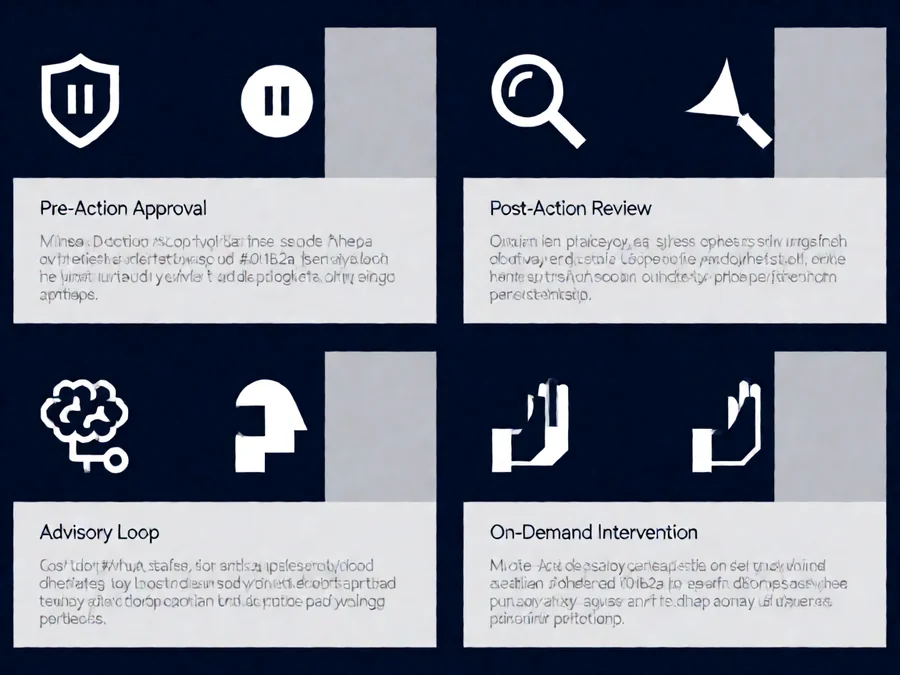
Pattern 1: Pre-Action Approval
\n
The agent pauses before executing a high-risk action and awaits human confirmation. Best for financial transactions, infrastructure changes, and data deletion.
\n
| Scenario | Approval Type | Timeout | Use Case |
|---|---|---|---|
| Payment >$10K | Dual human sign-off | 24 hours | Bank transfers, procurement |
| DB schema change | Team lead approval | 4 hours | Production migrations |
| Config update | Single approval | 1 hour | Environment variables, feature flags |
| Read-only query | Auto-approve | N/A | Data exploration, analytics |
| Critical system restart | On-call manager | 30 minutes | Service restoration, failover |
\n\n
Pattern 2: Post-Action Review
\n
Agent acts first, then humans audit the outcome. Suitable for low-risk, high-volume operations where retroactive correction is cheap. Common in content moderation and automated testing.
\n
This pattern excels when speed matters more than absolute accuracy. E-commerce product listing agents can publish 10,000 items per hour, with humans reviewing a random 1% sample for quality assurance.
\n\n
Pattern 3: Advisory Loop
\n
Human provides guidance without veto power. The agent incorporates feedback but makes final calls. Useful for coaching junior agents and iterative improvement.
\n
Consider a legal research agent drafting contract clauses. Senior lawyers review and annotate, but the agent decides final wording based on precedent analysis. This pattern builds agent capability while maintaining quality standards.
\n\n
Pattern 4: On-Demand Intervention
\n
Humans can interrupt running agents at any time. Requires checkpointing and state persistence so agents can resume from the interruption point.
\n
Critical for long-running workflows like code compilation pipelines or multi-step data migrations. Operators can pause, inspect intermediate results, and resume or abort as needed.
\n\n
Pattern 5: Scheduled Checkpoints
\n
Agents operating over extended periods (hours to days) must periodically present their status for human review. This prevents drift and ensures alignment with changing requirements.
\n
Common in batch processing systems, ML training runs, and automated compliance audits. Each checkpoint includes progress metrics, encountered anomalies, and recommended next actions.
\n\n
Implementation Checklist for Production HITL
\n
- \n
- Define escalation criteria: What triggers human review? Use risk scoring based on action type, value, and context.
- Design approval interfaces: Slack bots, web dashboards, or CLI tools. Keep them agent-agnostic.
- Set timeouts: Approvals expire. Define SLAs for different urgency levels.
- Audit trails: Log every human decision with timestamp, actor, and rationale.
- Fallback modes: What happens when the approval system is down? Queue actions or pause entirely?
- Permission scoping: Not all humans can approve all actions. Role-based access control is essential.
- Training programs: Approvers need guidance on when to approve vs. escalate.
- Feedback loops: Captured decisions should improve agent reasoning over time.
\n
\n
\n
\n
\n
\n
\n
\n
\n\n
Risk Scoring Framework
\n

\n
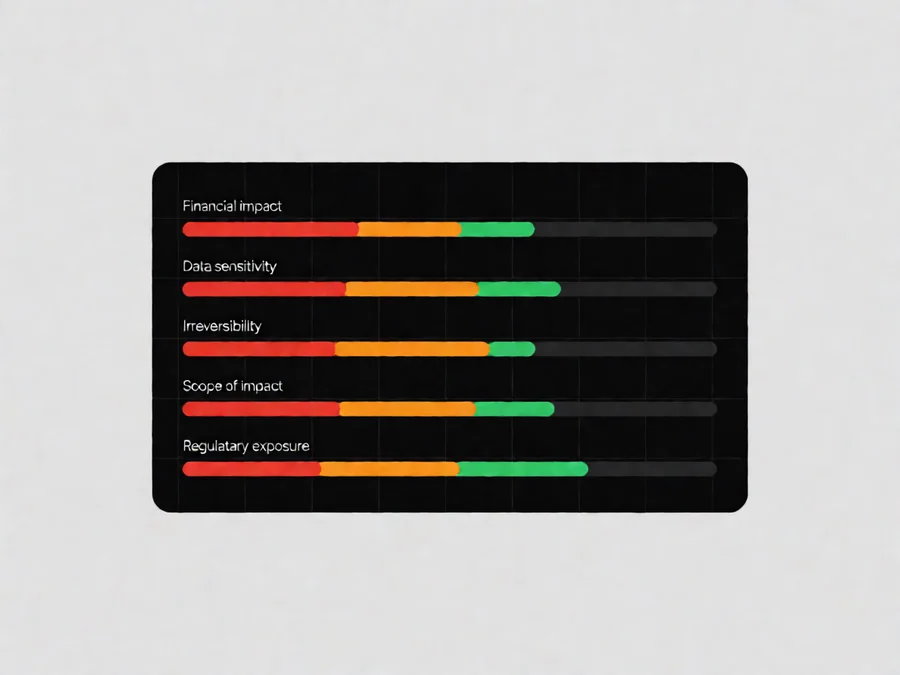
| Factor | Weight | Score Range | Examples |
|---|---|---|---|
| Financial impact | High | 0\u2013100 | Transaction amount, refund risk |
| Data sensitivity | High | 0\u2013100 | PII, PHI, trade secrets |
| Irreversibility | Medium | 0\u201350 | Deletion vs. modification |
| Scope of impact | Medium | 0\u201350 | Single user vs. global config |
| Regulatory exposure | High | 0\u2013100 | Compliance violations, audit findings |
\n
Actions scoring above threshold require approval. Below threshold, auto-execute with logging. Thresholds should be adjusted quarterly based on incident analysis.
\n\n
Technical Architecture Considerations
\n\n
State Management
\n
HITL systems must preserve agent state across approval delays. Use durable queues with exactly-once processing semantics to prevent duplicate approvals or lost requests.
\n\n
Concurrency Control
\n
Multiple humans might approve the same action concurrently. Implement optimistic locking with version checks to prevent race conditions.
\n\n
Notification Design
\n
Approval requests should include: action summary, reasoning trace, confidence score, alternatives considered, and business justification. Too much information causes paralysis; too little invites blind approvals.
\n\n
Common Pitfalls in Human-in-the-Loop Design
\n\n
Pitfall 1: Approval Fatigue
\n
When humans approve hundreds of routine requests daily, they stop reading carefully. Solution: batch similar approvals and use smart defaults. Only escalate truly novel situations.
\n
Measure approval latency distributions. If median approval time drops below 30 seconds, your thresholds are too loose.
\n\n
Pitfall 2: Hidden Automation
\n
Agents learn to route around approval gates by rephrasing requests. Detect this with pattern analysis and periodic access reviews.
\n
Implement anomaly detection on approval bypass attempts. Sudden increases in rephrased requests signal gaming of the system.
\n\n
Pitfall 3: Single Point of Failure
\n
If one approver is on vacation, the pipeline stalls. Always have delegate chains and fallback approvers.
\n
Require at least two qualified approvers per action class, with automatic escalation after defined periods.
\n\n
Pitfall 4: Insufficient Context
\n
Approvers receive requests without full context. Include agent reasoning, confidence scores, and alternative options in approval prompts.
\n
Test approval interfaces with actual users. If they can’t explain why they approved an action, your context is insufficient.
\n\n
Pitfall 5: Over-Engineering
\n
Built elaborate approval workflows only to discover most decisions are straightforward. Start simple, add complexity only as failure modes demand it.
\n\n
Real-World Deployment Examples
\n\n
Example 1: Financial Services Compliance
\n
A banking agent monitors transactions for AML violations. Suspicious patterns trigger human review before account freezes. Result: 95% auto-classification with human oversight on edge cases, reducing false positives by 40%.
\n
The system scores each transaction on 12 risk dimensions, escalating any scoring above 75. Humans review the top 5% of flagged transactions weekly.
\n\n
Example 2: Infrastructure Change Management
\n
An IT ops agent proposes Kubernetes deployments. Changes to production clusters require two-eyes approval. Changes to dev clusters auto-approve. The system logs all decisions for compliance audits.
\n
Deployment success rate increased from 78% to 96% after implementing staged rollouts with human checkpoints between canary and full deployment.
\n\n
Example 3: Content Moderation
\n
A social platform agent flags harmful content. High-confidence violations auto-remove; borderline cases queue for human reviewers. Human feedback retrains the classifier weekly.
\n
Inter-annotator agreement improved from 0.65 to 0.89 after three months of continuous human feedback integration.
\n\n
Example 4: Medical Diagnosis Support
\n
An AI agent analyzes radiology images. Routine findings are documented automatically; suspicious patterns alert radiologists for review.
\n
The system reduced reporting turnaround time by 35% while maintaining diagnostic accuracy at 99.2%.
\n\n
Measuring HITL Effectiveness
\n\n
Key Metrics
\n
| Metric | Target | Measurement |
|---|---|---|
| Auto-approval rate | >80% | % of actions without human intervention |
| Mean approval time | <5 minutes | Average time from request to decision |
| Override rate | <10% | % of approved actions later reversed |
| Fault detection rate | >95% | % of agent errors caught by humans |
| Handler workload | <20%/day | % of time handlers spend on approvals |
\n\n
A/B Testing Approaches
\n
Run parallel approval flows with different thresholds. Compare error rates, latency, and handler satisfaction to find optimal balance points.
\n\n
Future Directions
\n
As models improve, HITL patterns will evolve. Emerging trends include:
\n
- \n
- Adaptive thresholds: Systems that learn when human intervention is actually needed
- Predictive escalation: Anticipating when confidence will drop and preemptively requesting help
- Collaborative reasoning: Real-time human-AI dialogue for complex problem-solving
- Explainability-first design: Agents that document reasoning automatically for smoother handoffs
\n
\n
\n
\n
\n\n
Frequently Asked Questions
\n\n
How do I decide between pre-action and post-action approval?
\n
Use pre-action for irreversible, high-cost, or regulated operations. Use post-action for reversible, low-cost, high-volume scenarios where rapid iteration matters more than perfect accuracy.
\n\n
What’s the minimum viable human-in-the-loop system?
\n
Start with a single approval channel (Slack or email), risk-based routing, and audit logging. Add complexity only as failure modes demand it.
\n\n
How do I prevent approval fatigue?
\n
Batch similar requests, use smart defaults with override options, and show confidence scores so humans focus on uncertain cases.
\n\n
Can agents self-correct after human feedback?
\n
Yes. Store human corrections in a feedback store and periodically retrain or adjust agent prompts. Some systems use a \”correction buffer\” that influences subsequent decisions.
\n\n
How should I handle approval timeouts?
\n
Default to safe actions on timeout: queue for retry, notify stakeholders, or fail closed depending on risk. Never auto-approve timed-out high-risk actions.
\n\n
What tools support human-in-the-loop workflows?
\n
Popular options include LangChain’s ToolNode with human approval, CrewAI’s task delegation, and custom webhook-based approval flows. Choose based on your existing stack.
\n\n
How often should I review HITL thresholds?
\n
Quarterly reviews based on incident analysis, metric trends, and business requirement changes. Annual comprehensive audits with external validation.
\n\n
Conclusion
\n
Human-in-the-loop patterns aren’t about limiting AI potential\u2014they’re about building trust and ensuring safety in production systems. The right pattern depends on your risk profile, regulatory environment, and user expectations. Start simple, measure approval times and override rates, and iterate toward the right balance.
\n\n
The most successful HITL implementations share one trait: they treat human attention as a scarce resource worth optimizing, not a bottleneck to work around.
\n\n
Ready to implement HITL patterns in your SmaugBrain deployments? Explore SmaugBrain for production-ready agent orchestration with built-in approval workflows and audit trails.
\n”