
# AI Agent Drift Detection in Production: A Practical Guide to Maintaining Performance Over Time
## Introduction
AI agents deployed in production environments face a persistent challenge: their performance degrades over time as the world around them changes. This phenomenon, known as **drift**, can silently erode agent reliability without triggering obvious failures. Understanding drift detection is critical for maintaining production AI systems.
Drift manifests in multiple forms. Input data may shift as user behavior evolves or external conditions change. Model behavior can drift when fine-tuning introduces unexpected side effects or when the model’s understanding of language patterns diverges from current usage. Tool outputs may become unreliable as third-party APIs evolve their interfaces or return codes.
This guide provides a practical framework for implementing drift detection in production AI agent systems. We’ll cover what drift looks like in practice, how to measure it systematically, and what actions to take when anomalies are detected.
## What Is AI Agent Drift?
Drift refers to any deviation from expected behavior that occurs after deployment. Unlike traditional software bugs, drift is gradual and often subtle. The agent still functions, but its outputs become less reliable, less relevant, or less aligned with current requirements.
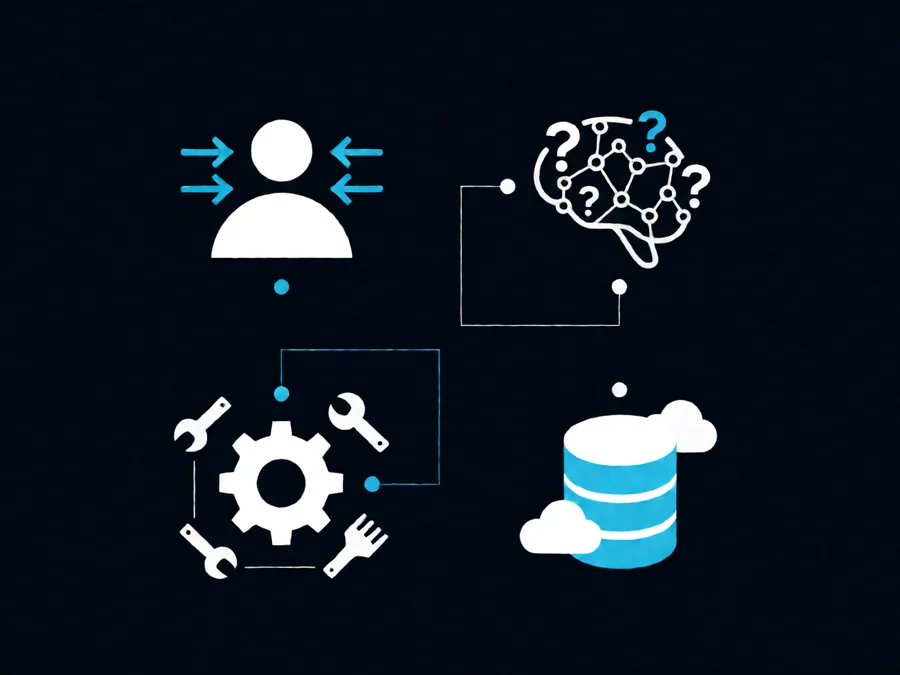
In the context of AI agents, drift affects multiple layers of the system architecture. At the input layer, user queries may evolve in tone, complexity, or domain focus. At the model layer, the underlying language model may generate responses with different quality characteristics. At the tool layer, external APIs may change their response formats or behavior patterns.
The consequences of undetected drift compound over time. Small performance degradations accumulate, eventually leading to significant reliability issues. Users notice slower responses, incorrect information, or inappropriate tool selections. In production environments, these issues directly impact business outcomes and user trust.
## Types of Drift in AI Agent Systems
### Input Drift
Input drift occurs when the distribution of queries or prompts changes over time. User behavior evolves, new use cases emerge, and language patterns shift. An agent trained on formal business queries may struggle when users start asking casual questions. Similarly, domain-specific agents can fail when users introduce topics outside the training coverage.
Common indicators of input drift include declining completion rates, increased clarification requests, and higher error rates on specific query types. Monitoring input distributions helps identify when the agent’s training data no longer represents current usage patterns.
### Model Drift
Model drift affects the quality and consistency of AI-generated responses. Even without retraining, language models can exhibit different behavior patterns due to temperature variations, context window effects, or subtle changes in how the model interprets instructions. When prompts are updated or system instructions change, the model’s response distribution shifts accordingly.
Model drift is particularly challenging because it doesn’t produce obvious errors. Responses remain coherent and grammatically correct, but their quality, relevance, or alignment with user intent may degrade gradually.
### Tool and Integration Drift
Tool drift occurs when external dependencies change their behavior. APIs update their endpoints, return codes, or response formats. Authentication methods evolve. Rate limits shift. Third-party services may retire features or change pricing models.
For AI agents that rely heavily on external tools, integration drift is a major source of production failures. A tool that worked perfectly in testing may behave differently in production due to changes outside your control.
### Data and Knowledge Drift
Knowledge drift affects agents that rely on external knowledge sources or databases. As information changes, cached or retrieved content becomes stale. Product prices update, documentation moves, factual information becomes outdated. Agents returning stale information appear unreliable even when their core logic is sound.
## Measuring Drift: Key Metrics
### Quality Score Tracking
Implement quality scoring for agent outputs across multiple dimensions. Common metrics include response relevance, accuracy, completeness, and alignment with user intent. Use a combination of automated evaluation and human review to establish baseline scores, then track deviations over time.
Quality scoring should be integrated into the agent’s output pipeline. Each response gets evaluated against established criteria, and scores are logged with metadata for trend analysis. When quality scores drop below thresholds, the system triggers alerts for investigation.
### Confidence and Certainty Metrics
Monitor the model’s confidence levels in its predictions and decisions. Sudden drops in confidence may indicate the model is encountering unfamiliar patterns or inputs outside its training distribution. Track confidence distributions over time to identify gradual shifts.
Confidence metrics are particularly useful for detecting edge cases where the model is struggling but not failing completely. These borderline cases often represent the early warning signs of drift.
### User Feedback Signals
User interactions provide rich feedback signals about agent performance. Track metrics such as acceptance rates, correction frequency, follow-up questions, and explicit feedback. A declining acceptance rate or increasing correction frequency often indicates drift before it becomes obvious through other metrics.
Implement lightweight feedback mechanisms that don’t disrupt the user experience. Simple thumbs up/down, relevance ratings, or even analyzing whether users accept suggested actions can provide valuable signals.
### Latency and Resource Usage
Monitor latency patterns and resource consumption. Drift can manifest as increased processing times when the agent encounters unfamiliar patterns requiring more computation. Unusual spikes in token usage or API calls may indicate the agent is struggling with changed inputs or degraded tool responses.
## Implementing Drift Detection
### Baseline Establishment
Before detecting drift, you need to establish baselines. Run the agent in production for an initial period, collecting metrics on all relevant dimensions. Document normal operating ranges for quality scores, latency, confidence levels, and user feedback metrics.
Baseline establishment should include different operating conditions. Collect data under various load levels, during peak hours, and across different user segments. This creates a comprehensive baseline that accounts for normal variation in production environments.
### Statistical Process Control
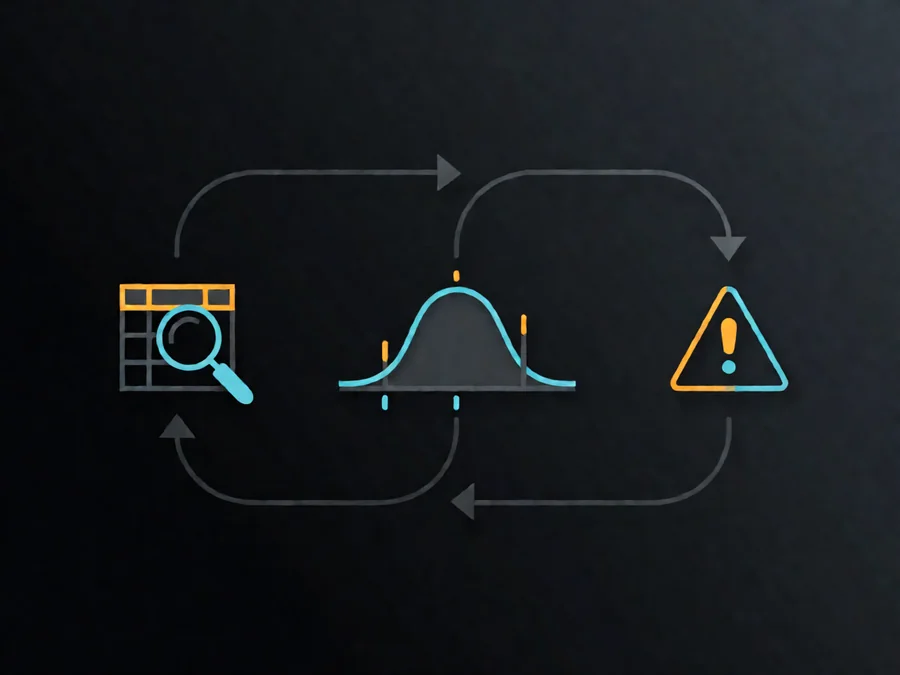
Apply statistical process control techniques to monitor key metrics over time. Use control charts to visualize metric trends and identify when values exceed expected ranges. Techniques like moving averages, exponential smoothing, and standard deviation tracking help distinguish normal variation from meaningful drift.
Control charts should be updated continuously as new data arrives. When metrics exceed control limits or show sustained trends in one direction, the system should flag these as potential drift indicators.
### A/B Testing for Changes
When making changes to the agent system—whether updating prompts, modifying tool integrations, or adjusting parameters—use A/B testing to detect drift caused by those changes. Run the modified version alongside the current version, comparing key metrics to establish whether the change improved or degraded performance.
A/B testing provides controlled conditions for evaluating changes. Even small performance differences become meaningful when measured across thousands of interactions, helping detect subtle drift that manual review might miss.
### Automated Alerting
Set up automated alerts when metrics exceed defined thresholds or show sustained trends. Alerts should be actionable, providing enough context to investigate the issue. Include recent metric values, trend information, and links to relevant logs or dashboards.
Alert thresholds should be calibrated to avoid both noise and missed detections. Too many false alerts cause alert fatigue; too few allow drift to progress unnoticed. Regularly review and adjust thresholds based on observed patterns and investigation results.
## Responding to Detected Drift
### Root Cause Analysis
When drift is detected, conduct systematic root cause analysis. Examine recent changes to the system, including updates to prompts, tools, integrations, or deployment configurations. Review input distributions to identify shifts in user behavior or query patterns. Analyze error patterns and failure modes to pinpoint specific failure points.
Root cause analysis should involve multiple stakeholders. Engineers who understand the system architecture, product managers who know user expectations, and data analysts who can interpret metric trends all contribute to identifying the underlying causes.
### Mitigation Strategies
Various mitigation strategies address different types of drift. For input drift, consider retraining or fine-tuning the model on recent data. For tool drift, update integrations to match changed APIs or add fallback mechanisms. For model drift, experiment with prompt engineering, temperature adjustments, or alternative model versions.
Mitigation should be gradual and monitored. Deploy changes in stages, observing their effects on key metrics. If a mitigation strategy doesn’t improve drift or introduces new issues, revert and try a different approach.
### Continuous Monitoring
Implement continuous monitoring to catch drift early and maintain system health over time. Dashboard visibility into key metrics helps teams maintain awareness of system performance. Regular reviews of drift indicators and trend analysis inform proactive maintenance decisions.
Continuous monitoring should be part of operational routines. Include drift metrics in daily standups, weekly reviews, and monthly reports. Track long-term trends to understand seasonal patterns, growth effects, and the impact of system changes on agent performance.
## Case Studies
### E-commerce Support Agent
An e-commerce support agent showed declining quality scores over three months. Analysis revealed that product categories were shifting as the catalog expanded, but the agent’s knowledge base wasn’t updated proportionally. Implementing automated knowledge base refreshes and expanding category coverage restored quality scores to baseline levels.
### Financial Analysis Assistant
A financial analysis agent experienced increased latency and error rates during market volatility periods. The agent’s tool integrations relied on market data providers that implemented stricter rate limits during high-volume periods. Adding caching, fallback data sources, and adaptive rate limiting resolved the performance degradation during volatile periods.
### Healthcare Information System
A healthcare information agent began returning outdated treatment guidelines. The underlying medical knowledge base was updated quarterly, but clinical guidelines changed more frequently. Implementing a real-time guideline update system and adding freshness indicators to responses prevented the use of outdated medical information.
## Common Pitfalls
### Ignoring Gradual Changes
Small, gradual drift is harder to detect than sudden breakdowns. Without systematic monitoring, teams may not notice performance degradation until it becomes significant. Implement continuous monitoring to catch gradual changes early.
### Over-reliance on Automated Metrics
While automated metrics are valuable, they can miss contextual factors. A quality score might remain stable while user satisfaction declines due to subtle changes in interaction style. Combine automated monitoring with regular user feedback collection and qualitative analysis.
### Reactive Rather Than Proactive Approaches
Many teams respond to drift only after users complain. Implementing proactive monitoring and alerting systems allows teams to address drift before it impacts users significantly. Establish thresholds and response procedures that enable early intervention.
### Neglecting Tool Dependencies
Tool drift is often overlooked because teams focus on their core agent logic. However, external dependencies can be significant sources of performance degradation. Monitor tool integration health alongside agent performance metrics.
## Implementation Checklist
– [ ] Define key performance metrics and establish baseline values
– [ ] Implement automated quality scoring for agent outputs
– [ ] Set up statistical process control for trend monitoring
– [ ] Configure alerts for metric deviations and sustained trends
– [ ] Establish root cause analysis procedures for drift events
– [ ] Create mitigation playbooks for common drift scenarios
– [ ] Implement continuous monitoring dashboards
– [ ] Conduct regular reviews of drift indicators and trends
– [ ] Document drift incidents and resolution approaches
– [ ] Train team members on drift detection and response procedures
## Conclusion
Drift detection is essential for maintaining production AI agent systems over time. By implementing systematic monitoring, establishing baselines, and responding proactively to detected changes, organizations can maintain agent reliability and performance. The key is treating drift detection as an ongoing operational practice rather than a one-time setup exercise.
Regular review of drift metrics, combined with user feedback and systematic investigation of deviations, creates a resilient approach to maintaining AI agent quality. As agent systems become more integral to business operations, the ability to detect and respond to drift becomes a competitive advantage.
## Frequently Asked Questions
**Q: How often should I check for drift?**
A: Implement continuous monitoring with automated alerts for significant deviations. Review drift metrics daily for critical systems, weekly for standard operations, and monthly for long-term trend analysis.
**Q: What’s the difference between drift and a bug?**
A: Bugs are discrete failures in logic or implementation. Drift is gradual degradation of performance due to changing conditions. Bugs typically require code fixes; drift often requires model updates, retraining, or configuration adjustments.
**Q: Can I prevent drift entirely?**
A: Complete prevention is impossible in dynamic environments. However, systematic monitoring and proactive responses can minimize drift’s impact on system performance and user experience.
**Q: How do I know if drift is serious?**
A: Evaluate drift severity based on business impact, user feedback, and metric degradation magnitude. Small deviations may be acceptable; sustained trends or rapid degradation warrant immediate investigation.
**Q: What tools help with drift detection?**
A: Various tools support drift detection, including monitoring platforms, statistical analysis libraries, and custom metric tracking systems. Choose tools that integrate with your existing observability stack and support your specific monitoring requirements.
—
*Ready to implement robust drift detection for your AI agent system? Visit [SmaugBrain](https://www.smaugbrain.com/) to learn about our comprehensive agent platform with built-in monitoring and automatic drift detection capabilities.*