
AI Agent Error Handling and Observability: A Production Guide
Why Error Handling Matters for AI Agents
Unlike traditional software, AI agents operate in unpredictable environments. They interact with external APIs, process ambiguous inputs, and execute multi-step workflows where any failure can cascade. Without robust error handling, a single API timeout or malformed response can corrupt entire workflows or leave systems in inconsistent states.
Production AI agents require systematic approaches to error detection, recovery, and monitoring. This guide covers practical strategies for building agents that gracefully handle failures while maintaining observability for debugging and optimization.
Types of Errors AI Agents Face
Understanding error categories helps design appropriate handling strategies:
Transient Failures
Temporary issues that resolve on retry: API rate limits, network timeouts, service degradation. These represent 60-80% of production errors and should be handled with exponential backoff and circuit breakers.
Persistent Failures
Systematic issues requiring intervention: authentication failures, permission errors, schema changes in external APIs. These need alerting and manual resolution paths.
Semantic Errors
Logical mistakes in agent reasoning or tool selection: calling the wrong API endpoint, misinterpreting responses, generating invalid tool parameters. These require validation layers and output verification.
Context Limit Exceedances
Token limit breaches when processing large documents or maintaining long conversations. These need chunking strategies and summary-based context management.
Error Handling Patterns
| Pattern | Use Case | Implementation |
|---|---|---|
| Retry with Backoff | Transient API failures | Exponential backoff with jitter, max 3-5 attempts |
| Circuit Breaker | Repeated failures | Open circuit after threshold, half-open for testing |
| Fallback Responses | Critical operations | Alternative logic when primary path fails |
| Skip and Continue | Non-critical steps | Log error, proceed with next step |
| Compensation Actions | Partial completion | Undo side effects, restore state |
Implementing Retry with Exponential Backoff
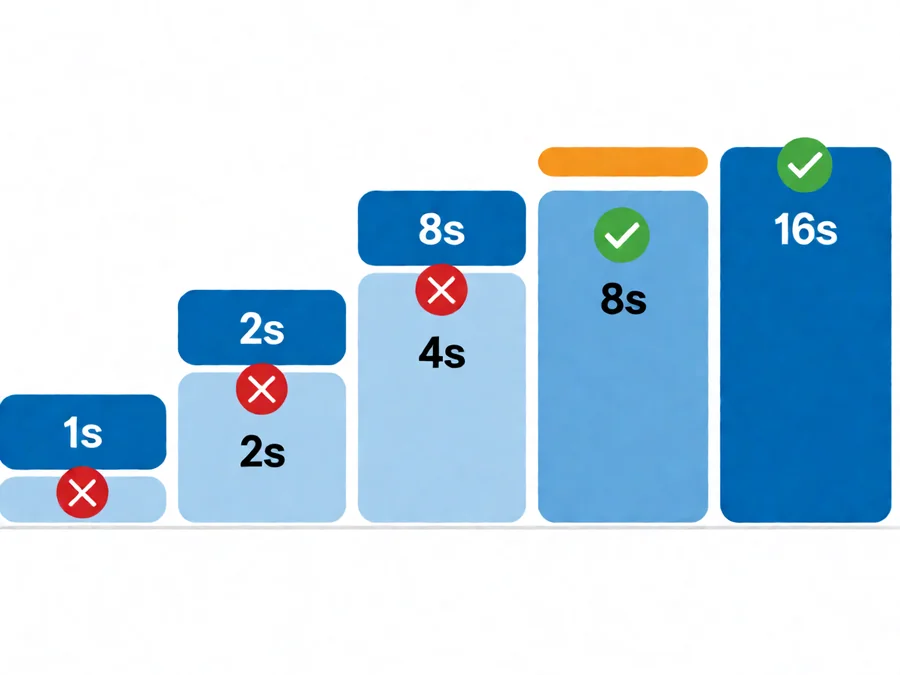
The most common pattern for handling transient failures. SmaugBrain agents implement this automatically with configurable parameters:
- Initial delay: 1 second
- Maximum delay: 60 seconds
- Backoff multiplier: 2x
- Maximum retries: 3-5 (configurable per tool)
- Jitter: random 0-25% to prevent thundering herd
Example implementation shows the pattern in action:
for attempt in range(max_retries):
    try:
        result = await call_external_api(payload)
        return result
    except RateLimitError as e:
        if attempt == max_retries - 1:
            raise
        delay = min(initial_delay * (2 ** attempt), max_delay)
        delay *= random.uniform(0.75, 1.0)  # jitter
        await asyncio.sleep(delay)
    except NetworkTimeout:
        continue  # retry immediately
Circuit Breaker Implementation
When an external service fails repeatedly, continuing to attempt calls wastes resources and may trigger rate limits. Circuit breakers transition through three states:
- Closed: Normal operation, failures counted
- Open: Failures exceeded threshold, immediate failure returned
- Half-Open: After timeout, one test request allowed
This pattern prevents cascading failures across your system and gives external services time to recover.
Observability for AI Agents

Effective error handling requires visibility into agent behavior. Three pillars of observability apply:
Logs
Structured logging captures execution traces, tool calls, parameter values, and error conditions. Key principles:
- Log at appropriate levels (DEBUG, INFO, WARN, ERROR)
- Include correlation IDs for request tracing
- Avoid logging sensitive data (API keys, PII)
- Use JSON format for programmatic parsing
Good logging practices include capturing the input that caused failures, the error message, and the state of the system before the error occurred.
Metrics
Quantitative measures of agent performance and reliability:
- Success/failure rates by tool and operation type
- Latency percentiles (p50, p95, p99)
- Token consumption per execution path
- Rate limit hit frequency
- Retry counts and outcomes
- Time to recovery from failures
Track these metrics in real-time dashboards and set up alerts for anomalous patterns.
Traces
End-to-end request flow visualization showing all tool calls, their durations, and outcomes. Essential for debugging complex multi-step agent workflows.
Tracing helps answer: Which tool call failed? How long did each step take? What was the input that caused the error? Did the failure occur before or after a specific decision point?
Error Recovery Strategies
Self-Correction Loops
When an agent detects an error, it can attempt recovery by:
- Analyzing the error message and context
- Generating an alternative approach
- Executing the recovery attempt
- Validating the outcome
This pattern works well for semantic errors where the agent has enough context to adjust its strategy. For example, if a search API returns empty results, the agent might reformulate the query or try a different data source.
Human-in-the-Loop Escalation
For persistent or high-severity errors, agents should escalate to human operators:
- Clear error description with context
- Recommended actions or alternatives
- Easy resumption path after resolution
- Audit trail of attempted recoveries
Escalation should include all relevant context: what was being attempted, what failed, what was tried, and what options exist for resolution.
Practical Implementation with SmaugBrain
SmaugBrain provides built-in error handling mechanisms that follow these patterns:
- Automatic retries: Configurable per tool with exponential backoff
- Timeout enforcement: Tool-specific timeouts prevent hangs
- Error categorization: Transient vs. permanent failure classification
- Structured logging: JSON logs with execution context
- Alert integration: Webhook notifications for persistent failures
Configure these settings in your SmaugBrain agent definitions to match your reliability requirements.
Implementation Checklist
Before deploying AI agents to production, verify these error handling requirements:
| Checklist Item | Status |
|---|---|
| Retry logic with exponential backoff implemented | ☐ |
| Circuit breakers for external dependencies | ☐ |
| Structured logging with correlation IDs | ☐ |
| Error metrics dashboard configured | ☐ |
| Human escalation paths defined | ☐ |
| Recovery procedures documented | ☐ |
| Penetration testing for error injection | ☐ |
| Rollback strategy for failed deployments | ☐ |
Common Pitfalls in Error Handling
Avoid these mistakes when building production AI agents:
Swallowing Errors
Silently catching all exceptions hides real problems. Always log errors with sufficient context for debugging. Use specific exception types rather than bare except clauses.
Over-Retrying
Retrying persistent failures wastes resources. Distinguish between transient and permanent failures before retrying. Check if the error is in a retryable category.
Ignoring Partial Success
When a workflow completes some steps before failing, ensure state consistency rather than leaving systems partially updated. Implement compensation actions for completed steps.
Lack of Recovery Paths
Agents that fail without recovery options create bad user experiences. Design graceful degradation strategies that maintain core functionality even when some features fail.
Monitoring and Alerting Setup
Production readiness requires monitoring infrastructure:
- Real-time error rate dashboards with 5-minute refresh
- Alert thresholds for unusual failure patterns (3-sigma detection)
- Weekly reliability reports tracking MTTR and error trends
- Root cause analysis templates for recurring failures
- Sla tracking for availability and latency targets
Set up alerting that distinguishes between critical failures requiring immediate response and informational errors for review.
Case Study: Production Incident Response
Consider a typical scenario: an AI agent processing customer support tickets fails when the email API returns intermittent 503 errors. Without proper error handling, the agent would either crash or leave tickets unprocessed.
With SmaugBrain’s implementation, the agent automatically retries with exponential backoff, opens a circuit breaker after 5 consecutive failures, logs structured error details, and escalates to a human operator when the circuit stays open for more than 10 minutes. This ensures ticket processing continues with minimal disruption.
Frequently Asked Questions
Q: How do I handle API rate limits in AI agents?
A: Implement exponential backoff with jitter for retry delays. Use circuit breakers when rate limits are repeatedly hit. Consider requesting higher rate limits from API providers for production workloads. SmaugBrain automatically manages rate limit backoff for supported integrations.
Q: What’s the difference between retry and fallback strategies?
A: Retry attempts the same operation again, suitable for transient failures. Fallback executes alternative logic when the primary approach fails, useful for critical operations where success is mandatory. Use retry first, fallback as safety net.
Q: How can I debug why an agent failed?
A: Check structured logs for the error message and execution context. Review traces to see which tool call failed and why. Look for patterns like repeated timeouts or specific error codes. Enable debug logging temporarily for complex failures.
Q: Should AI agents attempt self-recovery for all errors?
A: No. Self-recovery works for semantic errors where the agent has sufficient context. For persistent failures, authentication issues, or business logic violations, escalate to humans. Over-aggressive self-recovery can mask systematic problems.
Q: How do I prevent token limit errors?
A: Implement context chunking for large inputs, use summary-based context management for long conversations, and monitor token usage patterns. Set appropriate limits and alert when approaching thresholds.
Q: What metrics matter most for agent reliability?
A: Focus on error rate by operation type, latency percentiles, retry success rates, and mean time to recovery (MTTR). Track these weekly to identify degradation before users notice.
Q: How should I test error handling in my agent?
A: Use chaos engineering principles: inject failures into API calls, simulate network timeouts, and test circuit breaker behavior. Create test scenarios that exercise every error path your agent might encounter. Verify that recovery procedures work as expected.
Conclusion
Robust error handling and observability are essential for production AI agents. By implementing retry patterns, circuit breakers, structured logging, and comprehensive monitoring, you can build agents that gracefully handle failures while maintaining system reliability.
Start with the implementation checklist, configure SmaugBrain’s built-in error handling features, and continuously improve based on production metrics. Visit SmaugBrain.com to learn more about building reliable AI agent workflows.