Practical guide to selecting, configuring, and executing tools in AI agents. Learn tool design patterns, error handling, security controls, and production best practices.
S
 smaugbrain
Editor
Comprehensive guide to protecting AI agents from prompt injection attacks - covers attack vectors, defense architecture, detection strategies, and production implementation checklist.
S
smaugbrain
Editor
Design a production audit trail for cloud AI agent runs. This guide covers event schema, correlation across plans and tool calls, protection of secrets, integrity and retention, and operational signals.
S
smaugbrain
Editor
A practical AI agent incident response runbook covering severity, containment, evidence, recovery gates, and post-incident improvement.
S
smaugbrain
Editor
Learn how to secure AI agent credentials with short-lived tokens, least privilege, approval gates, secret isolation, audit logs, and tested revocation.
S
smaugbrain
Editor
Learn how to define AI agent SLOs for correct completion, tail latency, tool reliability, human intervention, and cost per successful outcome.
S
smaugbrain
Editor
A practical guide to AI agent cost control using request budgets, token limits, tool quotas, workflow guardrails, monitoring, and approval gates.
S
smaugbrain
Editor
Understand the difference between an AI agent and an agentic workflow, then use a practical decision framework to choose the right design, controls, and approval model.
S
smaugbrain
Editor
A practical guide to AI agent approval workflows, scoped permissions, immutable requests, audit trails, and human review for high-impact automation.
S
smaugbrain
Editor
Discover how to build reliable AI agent workflows with exponential backoff, circuit breakers, and idempotency keys. Practical retry strategies for production cloud automation.
S
smaugbrain
Editor
Learn practical strategies to reduce AI agent token consumption by managing memory effectively. From context trimming to persistent memory, reduce costs by up to 80%.
S
smaugbrain
Editor
AI agents running automated workflows will eventually hit errors. Learn five practical error-handling strategies: retry with backoff, fallback actions, circuit breakers, compensating rollbacks, and human escalation.
S
smaugbrain
Editor
A practical guide to securing MCP servers for cloud AI agents with least privilege, policy gates, sandboxing, approvals, and audit logs.
S
smaugbrain
Editor
Duplicate webhook callbacks can produce duplicate messages, tickets, and business writes. This article explains practical implementation methods for idempotency keys, unique constraints, deduplication windows, external operation receipts, compensation, and dead-letter queues.
S
smaugbrain
Editor
When an AI Agent can read files but cannot upload them, the cause usually involves path isolation, write permissions, format, size, web file controls, or attachment association. Use these 7 checkpoints to locate the failure, then verify the upload result by rereading the final record.
S
smaugbrain
Editor
Should an AI Agent execute directly or generate a draft first? This article explains how to choose among three levels—draft, execution after approval, and automatic execution—based on reversibility, the risks of repeated execution, acceptance difficulty, and the conditions for human takeover.
S
smaugbrain
Editor
Does an AI Agent scheduled task show success without sending a notification? Troubleshoot empty output, delivery destinations, platform permissions, attachments, timeouts, rate limiting, and retries in sequence, then verify the fix with an actual scheduled trigger.
S
smaugbrain
Editor
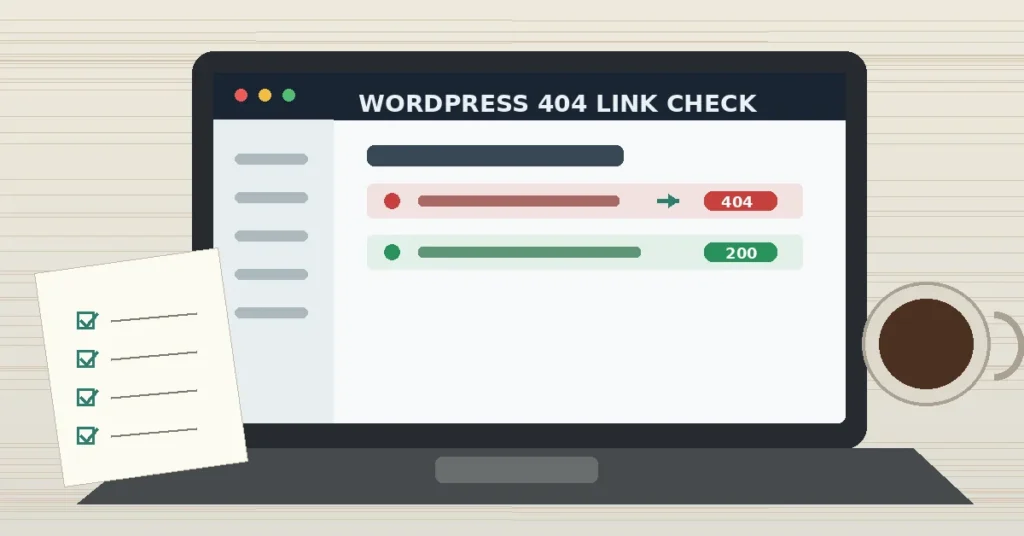
When WordPress internal links return 404 errors, how do you identify their sources, confirm the correct targets, repair the content, and complete front-end verification? This workflow can also be adapted into a scheduled checking task.
S
smaugbrain
Editor
When an AI agent fails, checking the API status alone is not enough. This article provides checklists for trace events, five categories of metrics, quality evaluation, alert response, and privacy-conscious logging.
S
smaugbrain
Editor
AI agent hallucinations cannot be solved with a single prompt. This article establishes layered defenses covering input, evidence, output validation, tool verification, and human review.
S
smaugbrain
Editor
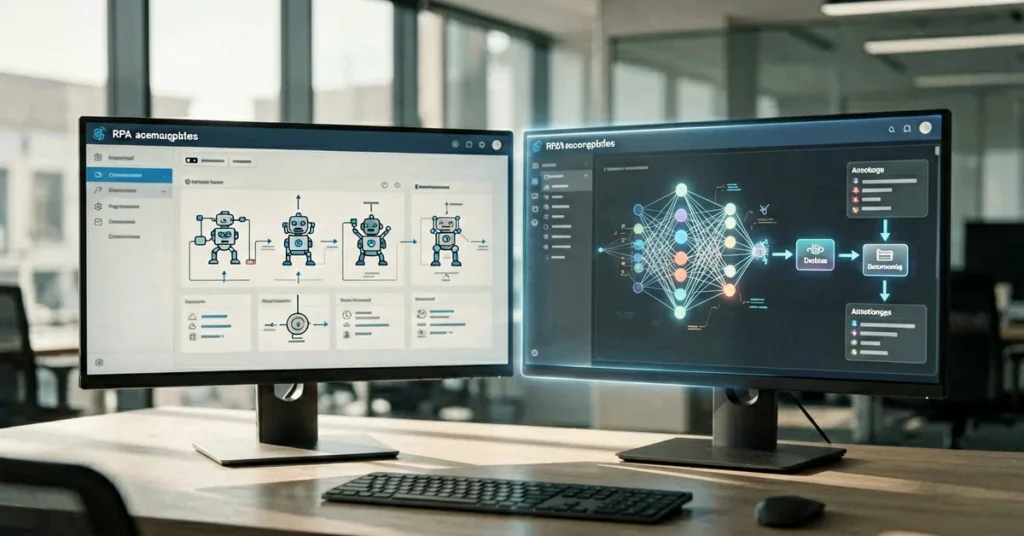
RPA is suitable for stable rules and UI operations, while AI agents are better suited to understanding unstructured information and making dynamic judgments. This article provides selection questions, a hybrid architecture, and a migration sequence.
S
smaugbrain
Editor
tutorials
Install the SmaugBrain Windows desktop app using the current official download page: confirm the version, fully extract the files, launch the app and log in, and troubleshoot issues with opening the app or unavailable Agents.
S
smaugbrain
Editor
Before launching NL2SQL, you must address schema mapping, ambiguity, read-only permissions, query limits, and auditing. This article provides a secure workflow from question to execution.
S
smaugbrain
Editor
When RAG answers miss the point, do not switch models first. This article provides a layer-by-layer troubleshooting process covering documents, chunking, queries, retrieval, ranking, and generation, along with a repeatable evaluation method.
S
smaugbrain
Editor
When building your first AI agent, do not aim for an all-purpose assistant immediately. This article uses a five-step method covering the goal, input, tools, boundaries, and acceptance criteria to help you implement a small, testable use case.
S
smaugbrain
Editor
An AI agent cannot be evaluated based on a single demonstration. This article explains task success, output quality, efficiency, and cost metrics, and provides a process for test sets and regression acceptance testing.
S
smaugbrain
Editor
When AI agents are connected to databases, email, and external tools, their security boundaries expand accordingly. This article provides a pre-launch checklist covering prompt injection, least privilege, privacy, and auditing.
S
smaugbrain
Editor
How can AI agent skills be both reusable and secure? This article covers interfaces, registration, execution, error handling, and testing, providing a checklist that can be used directly in design reviews.
S
smaugbrain
Editor
AI agent costs come from more than just tokens. Starting with per-task accounting, model routing, context, tool calls, storage, and failure retries, this article presents a six-step approach that prioritizes measurement before optimization.
S
smaugbrain
Editor
Multi-model routing is not about automatically selecting the “most capable model.” This article explains how to establish task tiers, model capability cards, quality thresholds, fallback chains, and continuous evaluation to prevent quality from spiraling out of control after costs are reduced.
S
smaugbrain
Editor